
DISEASES IN MILITARY PERSONNEL NOT RELATED TO BATTLE INJURY (Therapeutic profile)
- May 21
- 7 min read
Alla ASAULENKO
Major of the Medical Service
Deputy Chief of the Military Medical Clinical Center of the Eastern Region
for Medical Affairs
Roman KUZIV
Lieutenant Colonel of the Medical Service
Commander of the Military Medical Clinical Center of the Eastern Region
The injuries suffered by soldiers are not just wounds or acute post-traumatic conditions. War has a comprehensive impact on the physical and mental health of soldiers.
THE CONCEPT OF NON-BATTLE INJURIES
Non-battle injury in military personnel is a trauma that is not related to the war, meaning it didn`t result from the enemy's use of weapons or other means of warfare. Such injuries include those received during training, sports activities, accidents, as well as diseases that didn`t happen from the impact of combat operations. This category covers a wide range of wounds and diseases. In Ukraine they are directly related to the physical and emotional environment, as well as the age and fitness of the military population, which highlights the urgent need to improve military healthcare facilities [1].
Non-battle injuries can affect soldiers’ ability to perform combat missions; therefore, their treatment and rehabilitation are essential for restoring combat capability.
Life under constant pressure, irregular working hours and physically demanding tasks in all kinds of weather are all leading to the negative and aggressive affect of the overall health in military personnel. In addition to gunshot wounds, blast injuries, concussions, and amputations, there are hidden conditions and diseases that are not directly related to combat trauma.
STRUCTURE OF THE THERAPEUTIC PROFILE MORBIDITY BY NOSOLOGICAL UNITS FOR THE FIRST HALF OF 2025 WITHIN THE ADMINISTRATIVE-TERRITORIAL AREA OF RESPONSIBILITY OF THE MEDICAL FORCES AND SUSTAINMENT GROUP “EAST”
Respiratory diseases | 2172 | 12% |
Mental disorders | 893 | 5% |
Gastrointestinal diseases | 1662 | 9% |
Infectious diseases | 2085 | 12% |
Nervous system disorders | 5094 | 28% |
Cardiovascular diseases | 3317 | 18% |
Injuries (Poisoning) | 505 | 3% |
Other | 2295 | 13% |
Nervous system disorders make up a significant share of the therapeutic morbidity structure.Back and neck pain is common in military personnel due to the daily use of body armor or ITLBV (individual tactical load-bearing vests) and helmets equipment (which weigh about 20 kg). To this burden, one must add the weight of a personal weapon, a backpack with gear, and the need to move while carrying this all. Carrying heavy objects and excessive physical exertion provokes the development of the anterior abdominal wall hernias (umbilical, inguinal, ventral).

The shortage of troops in Ukraine has led to a demographic shift in the Defense Forces.
In April 2024 Ukraine expanded conscription by lowering the enlistment age from 27 to 25 and reducing the list of medical conditions that exempt individuals from military service [7,8].
The need for experienced people and manpower now means that soldiers with pre- existing health issues, such as musculoskeletal disorders or chronic diseases like high blood pressure - are classified as “partially fit” for service, despite potential limitations [9].
This combination creates a complex healthcare challenge. Military personnel with pre- existing conditions are more vulnerable to musculoskeletal injuries under harsh conditions, while existing service conditions can limit the effectiveness of even healthy soldiers. Injuries such as plungs, fractures, and dislocations are common, as well as back pain and spinal injuries.

Cardiovascular diseases can develop in military personnel just like in the civilian population. These include coronary artery disease, hypertension, cerebrovascular disease (stroke), rheumatic heart disease, and other pathologies. Military service aspect can significantly affect the development and progression of these diseases, as well as their detection and treatment.
RISK FACTORS AND THE IMPACT OF MILITARY SERVICE ON THE DEVELOPMENT AND COURSE OF CARDIOVASCULAR DISEASES ARE FOLLOWING:
Psychological Stress: Prolonged combat operations, high level of responsibility, constant life and health threatening situations can significantly increase the risk of developing cardiovascular diseases, especially with individuals with pre-existing risk factors.
Physical Load: in A combination of intense physical activity and psychological stress can negatively affect the cardiovascular system.
Poor Nutrition and Irregular Sleep: Unstable diet and sleep schedule aspects of military service can worsen the condition of the heart and blood vessels.
Impact of Harmful Habits: Alcohol abuse and smoking which may be more widespread in military personnel can also negatively impact the cardiovascular system.
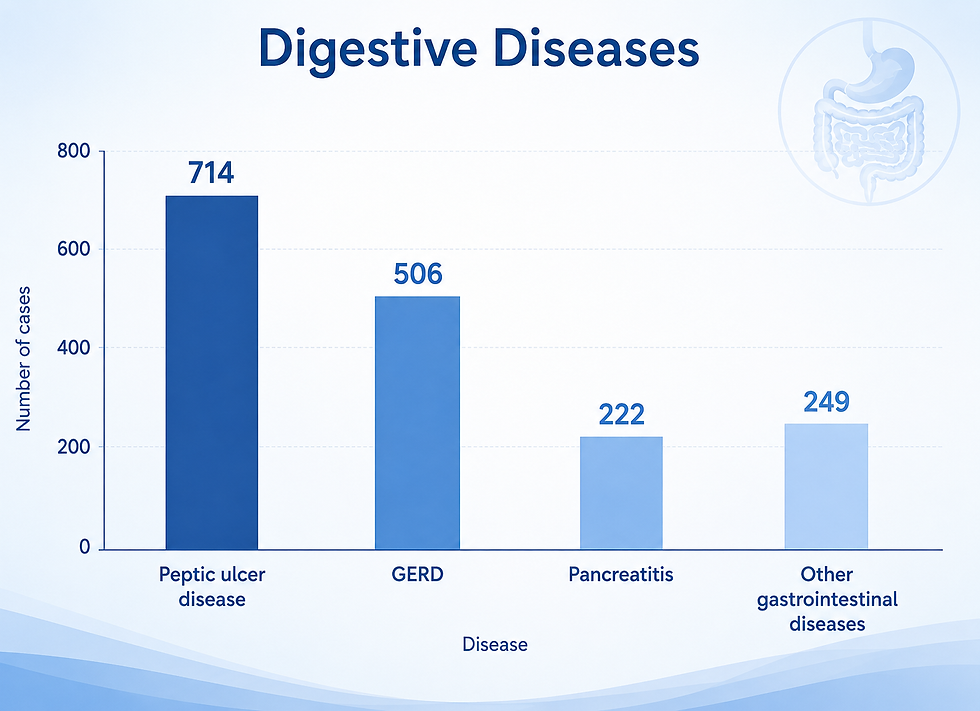
Gastrointestinal diseases. Problems related to changes in diet, daily routine, and the
impact of stress factors cause the onset of gastritis, gastroduodenitis, bloating, constipation and discomfort or lead to exacerbations of pre-existing chronic conditions.
In addition, poor nutrition and emotional stress lead to dental problems.
Dental care is highly specialized and therefore unavailable in the frontline positions, which creates the need for prolonged use of painkillers.
OVERHEATING AND HYPOTHERMIA
Military personnel's health complaints vary depending on the warm or cold season. In summer, sunburn, heat stroke and dehydration are common. In winter common issues include general hypothermia and frostbite of vulnerable body parts - nose, cheeks, ears, fingers and toes. General hypothermia also leads to the development of inflammatory processes in the upper and lower respiratory tract. Human immunity is significantly weakened by experienced stress. Because of prolonged staying in shelters and trenches soldiers often experience pain in the lower back and lower abdomen. This indicates inflammation of the kidneys and urinary system - the development of nephritis and cystitis, as well as the reproductive system damages. All of this, among other things, contributes to the rapid development/exacerbation of various infectious diseases.
Important:
Human immunity is significantly weakened by experienced stress..
As most servicemen note, service conditions often significantly limit the preventive measures necessary to minimize the consequences of diseases and injuries related to climate conditions. Dehydration due to the limited access to water is common in the summer months, as well as various dermatological problems, primarily of fungal etiology, while low temperatures and high humidity lead to hypothermia and frostbite in winter.
While the availability of resources such as heaters and warming blankets can reduce the spreading of frostbite, the prolonged periods in static position, and confined spaces, which is common in trench warfare, can lead to frequent cold injuries and respiratory illnesses, including influenza and pneumonia. The impact of climate factors such as cold weather can suppress immune function, increase the risk of infection, and lead to decline in morale and willpower as well as to increase stress levels among servicemen. The physical environment, characterized by trench warfare, delayed evacuation, harsh winters, and limited access to sanitary and hygiene supplies has created a favorable environment for infections [2].

The increasing number of cases of contamination with multidrug-resistant bacteria, both in post-traumatic injuries and respiratory infectious diseases, further complicates an already challenging situation [3,4,5]. Contributing factors include delays in evacuation, inconsistent use of antibiotics, and insufficient sanitary conditions.
Historical analysis of previous conflicts shows that under optimal conditions approximately 34% of survivable wounds become infected [6]. However, the current realities suggest a much worse situation, highlighting problems within the healthcare system and limited evacuation capabilities. This outlines the need for comprehensive data on pre-hospital and hospital-acquired infections to develop effective infection control protocols and preventive measures.

PSYCHOPATHOLOGY
Sleeping problems can be the result of physical injury or a reaction to experienced psychological trauma. Cognitive impairments include: difficulties with concentration, attention and memory, slowed or chaotic thinking and black-and-white or binary thinking. A rigid worldview (us - them, good - bad) also indicates psychological trauma, emotional exhaustion and fatigue.

The described reactions to trauma are scientifically proven responses of the nervous system at psychological, behavioral, and neurobiological levels. The nervous system, which is focused on self-protection, further recovery and adaptation to environmental conditions, shows corresponding reactions to painlessly cope with traumatic experience.
In addition, we quite often face with more serious psychopathology, sometimes of organic origin.
Important:
Non-battle injuries and diseases are taken into account in the general system of sanitary losses, but they are distinguished from combat losses associated with military operations. The implementation of VST Standard 01.305.003 — 2019 (01) “Medical Support. Classification of Battle Injuries, Non-battle Injuries, and Diseases in the Armed Forces of Ukraine” was developed and introduced for the medical service of the Armed Forces of Ukraine in order to establish a classification and nomenclature of battle and non-battle injuries based on etiopathogenetic (cause and course) and anatomical principles. It does not divide losses in accordance with the “battle - non-battle” criterion. Instead, this Standard allows to code battle and non-battle injuries in medical records and reports in information systems. Medical Service of the Armed Forces of Ukraine emphasizes: as in NATO countries, military medical institutions use the International Statistical Classification of Diseases and Related Health Problems (ICD) which this Standard supplement but does not replace.
CONCLUSIONS
Diseases in military personnel that are not related to combat operations are critical but often underestimated threat to military effectiveness. Historically, the number of diseases and non- battle injuries that are not related to combat actions have remained quite high alongside battlefield casualties, while dangerous environmental factors and physical load have degraded the combat capability of military units.
Climate conditions and the austerity of being on duty amplify these risks, when frostbite, hypothermia and other injuries can rapidly undermine operational capability. These challenges require proactive solutions: vaccination, hygiene protocols, acclimatization, proper layering and prompt medical response. Integrating prevention and early intervention is essential to maintaining resilience, morale, and mission success in some of the harshest conditions in the world.
REFERENCES
Lawry, L.L., Kanagaratnam, A., Roberds, A. et al. A qualitative assessment of disease and non-battle injuries in Ukraine since the Russian invasion. Confl Health 19, 19 (2025). https://doi.org/10.1186/s13031-024-00632-2
Murray CK, Hinkle MK, Yun HC. History of infections associated with combat-related injuries. J Trauma. 2008;64(3 Suppl):S221–31.
McGann P, Hang J, Clifford RJ, Yang Y, Kwak YI, Kuschner RA, et al. Complete sequence of a novel 178-kilobase plasmid carrying bla(NDM-1) in a Providencia stuartii strain isolated in Afghanistan. Antimicrob Agents Chemother. 2012;56(4):1673–9.
Kuzin I, Matskov O, Bondar R, Lapin R, Vovk T, Howard A, et al. Notes from the field: responding to the Wartime Spread of Antimicrobial-resistant organisms - Ukraine, 2022. MMWR Morb Mortal Wkly Rep. 2023;72(49):1333–4.
Pallett SJC, Trompeter A, Basarab M, Moore LSP, Boyd SE. Multidrug- resistant infections in war victims in Ukraine. Lancet Infect Dis. 2023;23(8):e270–1.
Tribble DR, Murray CK, Lloyd BA, Ganesan A, Mende K, Blyth DM, et al. After the battlefield: infectious complications among wounded warriors in the Trauma Infectious Disease outcomes Study. Mil Med. 2019;184(Suppl 2):18–25.
Arhirova H, Kullab S. Ukraine lowers its conscription age to 25 to replenish its beleaguered troops. AP. 2024. https://apnews.com/article/russia- ukraine-war-conscription-mobilization-251058a942a253f3eaec2c53373adf03
Ministry of Defence Ukraine. On the approval of the amendments to the regulation on military medical examination in the Armed forces of Ukraine. Verkhovna Rada of Ukraine; 2024.
Khalilov R, Unlimited. use. How sick people are mobilized to the army and what will change with the abolition of limited fitness. Ukrainska Pravda. 2024. https://www.pravda.com.ua/articles/2024/05/8/7454705/
Comments