
ISSUES OF PROSTHETICS AND REHABILITATION OF MILITARY PERSONNEL WITH LIMB AMPUTATIONS
- May 5
- 17 min read
Anna KOLESOVA
Major of the Medical Service, Head of the Department of Rehabilitation and Restorative Treatment, Zaporizhzhia Military Hospital
Roman KUZIV
Lieutenant Colonel of the Medical Service
Commander of the Military Medical Clinical Center of the Eastern Region
Relevance of the Problem of Prosthetics for Military Personnel in Ukraine
The issue of prosthetics for military personnel in Ukraine is currently one of the most underestimated socio-medical and state-level challenges. The full-scale war has led to a significant increase in the number of wounded soldiers with limb amputations. This has impacted not only the healthcare system but also social, economic, and psychological aspects of the society.
The loss of a limb is more than just a physical limitation, but also a dramatic change in the quality of life, loss of professional working proficiency, and the need for a long-term rehabilitation and adaptation to new conditions. Therefore; modern, functional, and accessible prosthetics is a key factor for wounded defenders to return to active life, social integration, and, in some cases, to continue military service or transition to civilian professional activity.
The relevance of this issue is further escalated by the limited resources of the prosthetic and orthopedic care system, a shortage of highly qualified specialists, and the need for cutting-edge technologies and individualized approach to each patient. Many soldiers require more than just basic prostheses, but also high-tech devices that allow for complex movements, withstand significant physical loads, and ensure maximum independence.
Beyond the medical aspect, prosthetic care also has important social and moral significance. Providing soldiers with high-quality prostheses is an indicator of the state’s responsibility toward those who defend its independence and territorial integrity. The effectiveness of this system directly affects trust in state institutions and the sense of social justice among soldiers and veterans.

Thus, the problem of prosthetics for military personnel in Ukraine is extremely urgent and requires a comprehensive approach that includes the development of medical technologies, professional trainings, state support, interagency cooperation, and a long-term rehabilitation system. The solution of this issue is vital not only for the physical recovery of wounded soldiers but also for strengthening the social resilience of Ukrainian society during wartime and in the post-war recovery period.
Types of Limb Amputations in the Context of Military Trauma and Prosthetics
In the conditions of modern warfare, limb amputations are among the most common consequences of mine-blast, gunshot, and combined injuries. The specific nature of military trauma leads to the complex damage to soft tissues, bones, vessels, and nerves, which directly impacts the choice of amputation level and further opportunities for prosthetics and rehabilitation.
From an anatomical viewpoint, amputations of the lower limbs are most frequently observed among soldiers, particularly at the level of the lower leg and thigh, which is associated with the effects of mines and explosive devices. Upper limb amputations typically involve the loss of the hand, forearm, or upper arm and have significant implications for the patient’s functional independence and the selection of prosthetic type.

From the prosthetic perspective, the distinction between distal and proximal amputations is extremely important. Distal amputations, provided there is sufficient residual limb length and preservation of functionally vital muscles are preserved, create better conditions for modern prostheses usage, including energy-storing, bionic, or modular systems. Proximal amputations, which are typical for severe combat injuries, significantly complicate prosthetic process and require the individual selection of complex technical solutions and prolonged rehabilitation.
In military medicine, amputations are classified by the timing of their performance into primary and secondary amputations. Primary amputations are made during extremely intense period of a combat trauma based on life-saving indications and often have an urgent, limb-saving nature. Secondary amputations are made at specialized care stages, considering the tissues condition, infectious complications, and prosthetic prospects. Reamputations belong to a separate group, which purpose is to form a well-shaped residual limb suitable for the effective use of a prosthesis.
From the standpoint of a prosthetic and rehabilitation perspective, typical amputations performed at standard anatomical levels are of particular importance, as they provide optimal conditions for the prosthesis fixation and functioning. However, atypical amputations are common among soldiers due to the nature of injuries, which requires a multidisciplinary approach involving surgeons, rehabilitation specialists, and prosthetists.
Thus, the types of limb amputations in military personnel are closely related to the nature of combat injuries and directly determine the prosthetic strategy, the scope of rehabilitation measures, and the prognosis for functional recovery. A rational selection of the amputation level, considering the possibilities of modern prosthetics, is a key condition for returning wounded defenders to an active and maximum independent life.
Given the variety of amputation levels and types of military trauma, the next stage of medical care is the prosthetics and comprehensive rehabilitation of soldiers. Specifically, particular features of the formed residual limb, the condition of the soft tissues and muscular system, and the preservation of adjacent joint function determine the ability of using modern prosthetic systems and the level of motor activity restoration.

Prosthetics after combat-related amputations cannot be considered an isolated technical process; rather, it is an integral part of a continuous rehabilitation pathway that begins at the moment of surgical intervention. Early rehabilitation, the formation of a functionally suitable residual limb, and the prevention of contractures and pain syndromes create the necessary environment for the effective selection and adaptation of a prosthesis. Subsequently, comprehensive physical, psychological, and social rehabilitation is aimed at restoring independence, work capacity, and the reintegration of solders into everyday life.
Patient Pathway: From Amputation to Full Rehabilitation
The patient pathway following limb amputation is a complex, structured, and multidisciplinary process that begins at the moment of injury and continues until the maximum possible recovery of functionality, independence, and social integration is achieved. The conditions of modern warfare led to a high frequency of severe mine-blast and gunshot injuries, which often result in traumatic amputations and combined trauma.
1. Amputation Stage and Primary Medical Care
Limb amputation in military personnel is usually a forced, life-saving intervention performed under combat conditions or during the early stages of evacuation.
The main goal at this stage is to preserve life, prevent infectious complications, ensure adequate surgical wound debridement, and form a functionally suitable residual limb keeping future prosthetics in mind.
2. Postoperative and Stabilization Period
After the amputation, the patient undergoes inpatient treatment, where wound healing is monitored, and measures are taken to prevent contractures, edema, and pain syndromes, including phantom limb pain. At this stage, it is important to involve specialists in physical and rehabilitation medicine, physical therapists, and psychologists, as well as to initiate early mobilization and training in self-care.
3. Preparation of the Residual Limb for Prosthetic
The next stage includes residual limb shaping, edema reduction, improvement of muscle strength and the range of motion. This involves the use of compression solutions, therapeutic exercises, massage, and physiotherapy. At the same time, an assessment of the patient’s functional status, amputation level, associated injuries, and overall rehabilitation potential is conducted.
4. Primary (Temporary) Prosthetics
Primary or preparatory prosthetics allows the patient to begin adapting to the prosthesis before the residual limb shape has fully stabilized. At this stage, the main goal is to restore basic standing and walking skills or upper limb usage, develop correct movement patterns, and evaluate prosthetic tolerance.
5. Functional Training and Rehabilitation
Prosthetic rehabilitation is an intensive process that includes physical therapy, occupational therapy, training in the use of the prosthesis in daily life, and, when necessary, in professional or military activities. Special attention is paid to the prevention of secondary complications, correction of gait or movement, as well as psychological adaptation to the changes of body and lifestyle.
6. Permanent Prosthetics and Long-term Support.
Once the patient's condition has stabilized and the active phase of rehabilitation has completed, a permanent prosthesis is selected, with activity level, individual needs, and goals of the soldier in mind. Ongoing support includes regular check-ups, adjustments or replacement of the prosthesis, follow-up rehabilitation courses, and socio-professional reintegration.
Prosthetic care for soldiers is not simple technical process of manufacturing a device, but a comprehensive system of medical, rehabilitative, psychological, and social support. Early initiation of rehabilitation, a multidisciplinary approach, and constant care are key factors in successful restoration of the quality of life and functional independence for soldiers with amputations.
Thus, the patient pathway following limb amputation encompasses consecutive stages of medical care, rehabilitation, and prosthetic fitting, all implemented with the involvement of a multidisciplinary team. However, the effectiveness and timeliness of transitioning to the prosthetic stage are determined not only by clinical indicators but also by proper organizational and legal support for the patient.
In this context, compliance with established regulatory procedures and the availability of a defined set of documents, which serve as the basis for providing a patient with prosthetic and orthopedic products - are of particular importance. Therefore, a detailed review of the documentation for the prosthetic process is essential to ensure the realization of patients’ rights and the continuity of the rehabilitation pathway.

Document package to be submitted to the Social Protection Fund
Indications for providing rehabilitation aids are determined based on functional prescriptions and the need to improve a person's functioning in accordance with the International Classification of Functioning, Disability and Health. The primary objective is to maintain or improve the individual's functioning, independence, and autonomy, improve overall well-being, and achieve rehabilitation goals.
The regulatory act that establishes the procedure for providing individuals with assistive rehabilitation equipment is the Resolution of the Cabinet of Ministers of Ukraine № 321 from April 5, 2012 «On approval of the procedure for provision of assistive rehabilitation equipment (technical and other rehabilitation facilities) to persons with disabilities, children with disabilities and other certain categories of population and payment of financial compensation for self-purchased assistive rehabilitation equipment, and their list» as amended.
First, the soldier must select a prosthetic and orthopedic enterprise accredited to provide prosthetic services under the state program. Then, the person, or the legal representative, submits the following documents to the Social Protection Fund:
- Application for the provision of rehabilitation equipment (reimbursement), in the form approved by the Ministry of Social Policy, regardless of the person’s registered or declared place of residence (stay);
- Copy of an identity document, such as a Passport of a Citizen of Ukraine, temporary certificate of a citizen of Ukraine, permanent residence permit, refugee certificate, or a certificate for a person in need of complementary protection (hereinafter – identity document);
- Copy of the Taxpayer Identification Number certificate (except for individuals who, due to their religious beliefs, have refused to accept a taxpayer identification number, have officially notified the relevant regulatory authority, and have a corresponding mark in their passport);
- Copy of a certificate confirming the individual’s right to benefits (if applicable);
- Medical conclusion regarding the necessity of providing assistive rehabilitation equipment (issued by a Military Medical Commission, Medical Advisory Commission, Medical-social Expert Commission, or Multidisciplinary Rehabilitation Team.
- Copy of the certificate (with presentation of the original one) on the circumstances of the injury (wound, concussion, trauma) issued by the commander of the military unit (head of the territorial unit), or another document containing information on participation in the anti-terrorist operation while being directly present in the area during the period of its conduct; in measures to ensure national security and defense against armed aggression of the Russian Federation in the Donetsk and Luhansk Oblast; or in measures necessary to ensure the defense of Ukraine, protecting the safety of the population and the interests of the state in connection with the military aggression of the Russian Federation against Ukraine (for persons specified in paragraphs 19-25 of the first part of Article 6 of the Law of Ukraine "On the Status of War Veterans, Guarantees of Their Social Protection" who have not been assigned disability status) (if available);
- Copy of the military ID card (for service members who are foreigners or stateless persons who have, in accordance with the established procedure, entered into a contract for military service in the Armed Forces, the State Special Transport Service, or the National Guard).
If an application for the provision of an assistive rehabilitation equipment (or reimbursement) is submitted through the individual’s electronic account in the database for the purpose of creating an electronic personal file, the individual or their legal representative should upload the data and/or scanned copies of the documents to the system. If there is already an electronic information exchange with state authorities, local self-government bodies, enterprises, institutions, and organizations that hold the information required for providing rehabilitation equipment, such information does not need to be submitted by the individual or their legal representative.
Main Types and Categories of Limb Prostheses
Limb prosthetics is a key component of the medical and social rehabilitation of individuals following amputation, particularly as a result of combat trauma Modern prosthetic technologies are aimed not only at compensating for the lost anatomical structure, but also at restoring functional activity, patient autonomy, and quality of life. Depending on the level of amputation, functional needs, and the patient’s clinical condition, different types of limb prostheses are used.
By localization, prostheses are divided into upper limb and lower limb prostheses. Upper limb prostheses are used for amputations at the level of the fingers, hand, forearm, or upper arm, and are intended to restore manipulative function, object grasping, and self-care. Lower limb prostheses are used for amputations of the foot, lower leg, thigh, or at the hip joint level, and provide weight-bearing function, verticalization, and mobility.
By functional purpose, prostheses are classified into cosmetic, functional, and specialized (task-specific) devices. Cosmetic prostheses replicate the external appearance of the lost limb but have limited or no active function, serving primarily a psychosocial factor. Functional prostheses enable active movements and the performance of daily activities. Specialized prostheses are designed for specific professional or physical tasks and can be equipped with interchangeable attachments or reinforced modules.

Depending on the control principle, prostheses are divided into passive, mechanical (body-powered), myoelectric, and bionic types. Passive designs have no active control elements and are mainly used for cosmetic purposes or during the early stages of the prosthetic fitting. Mechanical prostheses are operated through the user's body movements and are characterized by their simplicity, reliability, and relative affordability. Myoelectric prostheses function by detecting electrical signals from the residual limb muscles, allowing for more precise and controlled movement. Bionic prostheses are high-tech systems equipped with microprocessors and sensors capable of adapting to changing movement conditions and the individual characteristics of the user.
By application stages, prostheses are classified as temporary (primary) and permanent (definitive). Temporary prostheses are used during the early postoperative phase to shape the residual limb, prevent contractures, and prepare the patient for permanent prosthetic fitting. Permanent prostheses are custom-made for long-term use once the condition of the residual limb has stabilized.
It should be emphasized that the effectiveness of prosthetic fitting directly depends on timely and comprehensive rehabilitation. A prosthesis alone does not ensure full functional recovery without systematic training in its usage, physical adaptation, and psycho-emotional support. The rehabilitation process should begin as early as the pre-amputation or early postoperative stage and continue after the prosthesis is fitted.
Thus, prosthetics should be considered not as an isolated technical element, but as a component of a comprehensive rehabilitation system that includes physical therapy, occupational therapy, psychological assistance, and social adaptation. The integration of modern prosthetic technologies into a comprehensive rehabilitation program creates the conditions for the maximum functional independence in patients after amputation.

Early Rehabilitation After Amputation in the Acute Period
Early rehabilitation after limb amputation in the acute period is a critically important stage of restorative treatment, which largely determines future functional outcomes, the feasibility of prosthetic fitting, and the level of the patient's social adaptation. The acute period usually covers the first days and weeks following surgical intervention and is characterized by an active healing processes, a high risk of complications, and significant psycho-emotional stress.
The main tasks of early rehabilitation in the acute period include stabilization of the patient's general condition, prevention of postoperative complications, preparation of the residual limb for future prosthetics, and retention of the maximum possible level of functional activity. Rehabilitation measures should begin as early as possible, given that the patient’s somatic state is stable without any contraindications.
One of the key areas of early rehabilitation is the prevention of contractures and muscle atrophy. This is achieved through proper limb positioning, early mobilization, passive and active exercises in adjacent joints, and the gradual involvement of the patient in therapeutic physical activity. The training of correct body positioning while in bed or sitting, which helps to prevent the development of pathological postures of the residual limb is of particular importance.
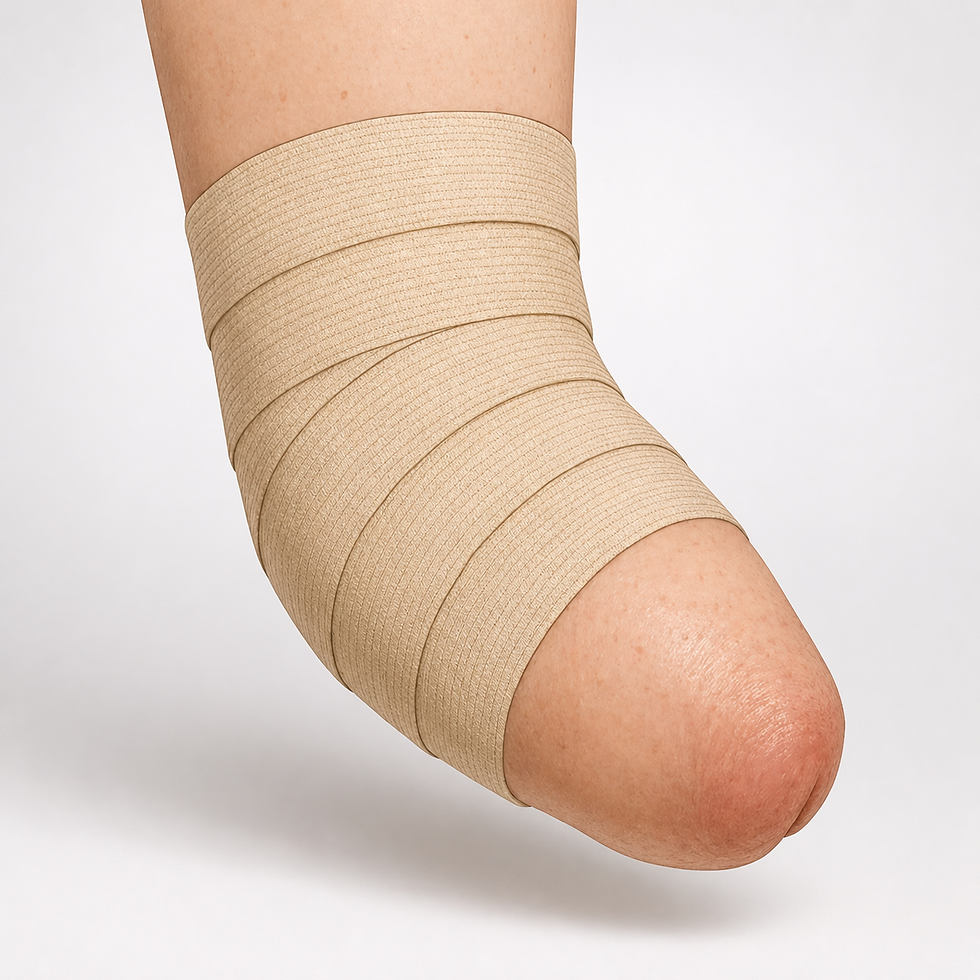
A residual limb care and pain syndrome management is also important. Proper analgesia, prevention of edema, infectious complications, and the formation of pathological scarring create the necessary conditions for optimal tissue healing. At this stage begins the development of the residual limb's load tolerance, specifically through elastic bandaging or the use of specialized compression equipment.
Early rehabilitation also includes psycho-emotional support for the patient. Amputation, especially as a result of combat trauma, is often accompanied by an acute stress reaction, anxiety, and the fear of losing working capacity. Psychological assistance, informing the patient about the further stages of treatment and rehabilitation, and fostering motivation for active participation in the recovery process are essential components of a comprehensive approach.
Thus, early rehabilitation in the acute period after amputation serves as the foundation for future prosthetics and long-term rehabilitation. Timely, multidisciplinary, and individualized rehabilitation measures allow for a reduction in complications, shortens recovery time, and improves functional outcomes for patients after amputations.
Patient Rehabilitation in the Post-Acute Period (Preparation for Prosthetic Fitting)
The post-acute rehabilitation period following limb amputation begins after stabilization of the patient's general condition and completion of the primary healing of the postoperative wound. This period is a transition between the acute phase of treatment and the actual prosthetic fitting and is crucial for forming a functionally capable residual limb ready for the load of a prosthetic-orthopedic equipment.
Main tasks of the post-acute period
The main goal of the post-acute period is to create optimal anatomical, functional, and psycho-emotional conditions for initiating prosthetic fitting. Key objectives include:
• Final shaping of the residual limb's volume and configuration;
• Reduction and stabilization of edema;
• Increasing the residual limb's tolerance to mechanical load;
• Restoration muscle strength and endurance;
• Correction and prevention of contractures;
• Preparation the patient for the use of a prosthesis.
Residual Limb Shaping and Stabilization
At this stage, compression methods are actively applied, including elastic bandaging, compression shrinkers, and silicone liners. Compression helps to reduce residual edema, the proper geometry of the residual limb, and improves tissue trophicity.
Postoperative scar management is another critical component: mobilization, massage, and skin care prevent the formation of adhesions, hypersensitivity, and pain during contact with the prosthesis.
Physical Therapy and Functional Training
In the post-acute rehabilitation period, physical therapy becomes more intensive and targeted. The program includes:
- Active and resistive exercises for the residual limb muscles;
- Body stabilization and balance training;
- Exercises for the preserved limbs to compensate for the functional load;
- Coordination and endurance development.
For patients with lower limb amputations, it is essential to train in mobility, weight-bearing, and preparation for verticalization with the help of assistive devices.
Desensitization and preparation for the contact with prosthetic.
Increased or altered sensitivity of the residual limb can significantly complicate adaptation to the prosthesis. Therefore, during the post-acute period, desensitization techniques are widely used to reduce pain and improve the perception of touch and pressure. This is a step-by-step preparation of the residual limb for prolonged contact with the prosthetic socket.
Psychological adaptation and patient education
The post-acute period is critical for understanding of realistic expectations about the prosthetics and future functional capabilities. Psychological support, education on residual limb care, and explanation of the stages of prosthetic fitting increase patient adherence to the rehabilitation program and reduce the risk of prosthetic rejection.
The completion of the post-acute rehabilitation period is determined by stabilization of the residual limb volume, the absence of active inflammation, sufficient muscle strength, and the patient's readiness for functional loading. Under these conditions, a transition to primary prosthetics fitting is possible, which is a logical extension of comprehensive rehabilitation and a basis of further restoration of physical activity and social integration.
Rehabilitation of patients after prosthetic fitting
Rehabilitation after prosthetic fitting is the final and, at the same time, one of the most prolonged stages of recovery for patients after limb amputation. Its primary goal is to develop effective skills in the prosthesis usage, to achieve maximum functional independence, and to improve the patient's quality of life.
Main tasks of the post-prosthetic rehabilitation period
After primary or permanent prosthesis fitting, rehabilitation measures are aimed at:
- Adaptation of the residual limb to the prosthetic device;
- Training in proper and safe use of the prosthesis;
- Restoration of motor skills and coordination;
- Prevention of secondary complications;
- Social and professional reintegration of the patient.
Adaptation of the Residual Limb to the Prosthesis
At the initial stage of prosthetic use, it is essential to gradually increase wearing time and to monitor the condition of the residual limb's skin. Regular inspection allows for the timely detection of signs of excessive pressure, friction, or impaired circulation. If necessary, adjustments of the prosthetic socket are carried out in collaboration with the prosthetist.
Skin care of the residual limb, hygiene, and moisture control are essential components for the prevention of dermatological complications.
Physical therapy and functional skills training
Physical therapy after prosthetic fitting is strictly functionally oriented. For patients with lower limb amputations, the main focus is on:
- Developing a proper gait pattern;
- Balance and coordination training;
- Training in weight-shifting and obstacles overcoming;
- Increasing endurance during prolonged physical activity.
In cases of upper limb amputations, the focus is placed on developing fine motor skills, coordination of movements, and the use of the prosthesis in daily and professional activities.
Prevention of Secondary Complications
Improper use of a prosthesis or insufficient physical conditioning can lead to the overloading of intact limbs, the spine, and joints. Therefore, rehabilitation program includes exercises to maintain body symmetry, correct posture, and prevent chronic pain syndromes.
Special attention is paid to the prevention of contractures, reduction the risk of falls, and preventing fatigue development.
Psychological and Social Adaptation
Rehabilitation following prosthetic fitting is tightly linked to the patient's psychological adaptation to the new mode of movements and altered body appearance. Psychological support helps to overcome fear of weight-bearing, build confidence in one's own abilities, and increase adherence to prosthesis usage.
Social reintegration involves the restoration of self-care skills, a return to an active life, and, a return to professional activities, if possible.
Long-term observation and prosthetic adjustment
Rehabilitation after prosthetic fitting is not limited to the initial training period. Changes in body weight, physical activity, or the condition of the residual limb may require re-evaluation and adjustment of the prosthesis. Regular multidisciplinary follow-up allows for the maintenance of an optimal level of functionality and the prevention of complications in the long-term perspective.
Psychological Rehabilitation of Soldiers After Limb Amputation and Prosthetics
Psychological rehabilitation is an integral component of the comprehensive recovery of soldiers after limb amputation and subsequent prosthetic fitting. The loss of a limb as a result of combat trauma is accompanied not only by significant physical limitations but also by profound psycho-emotional disturbances, which can significantly affect the effectiveness of physical rehabilitation and the process of adaptation to a prosthesis.
Psychological consequences of combat amputation
Amputation sustained in combat conditions is often associated with traumatic experiences, leading to a high risk of developing long-term psycho-emotional reactions. The most common psychological consequences include:
- Disturbance of body image and identity perception;
- Decreased self-esteem and confidence in one's own abilities;
- Emotional instability and anxiety;
- Difficulties in accepting the prosthesis as an integral part of one's own body;
- Problems in social interaction and returning to an active lifestyle.
These factors can negatively impact the patient's motivation for rehabilitation and the consistent, long-term use of the prosthesis.
Tasks of Psychological Rehabilitation
The primary goal of psychological rehabilitation is to restore mental balance, develop adaptive strategies for dealing with the consequences of trauma, and support the soldiers’ active participation in the physical rehabilitation process. Key tasks here include:
• Assistance in awareness and acceptance of changes in physical condition;
• Development of positive motivation for the prosthetic process;
• Reduction of emotional tension and fear of physical loading;
• Support for social and professional reintegration;
• Development of self-regulation and stress-resilience skills.
Stages of Psychological Assistance
Psychological rehabilitation should begin at the early stages of treatment and continue throughout the entire rehabilitation pathway. During the post-acute period and after prosthetic fitting, special attention is focused on prosthesis acceptance, overcoming the fear of failure, and establishing realistic expectations regarding functional capabilities.
Patient gradual involvement in active interaction with a multidisciplinary team helps to restore a sense of control over their life and increases the effectiveness of rehabilitation.
Psychological Adaptation to the Prosthesis
The period following prosthetic fitting is psychologically challenging, as it requires the restructuring of motor skills and a shift in body image. Psychological support during this time period is aimed at:
• Reducing emotional tension during training in prosthesis use;
• Support in cases of temporary setbacks and physical discomfort;
• Fostering a sense of functional integrity and autonomy;
• Reinforcing positive experiences of prosthesis use in everyday life.
Social Reintegration and Support for Soldiers
An important component of psychological rehabilitation is a preparation of the soldier to return into the social environment, their family, and to professional activity, if it is possible. Addressing social roles, self-identity, and long-term life goals contributes to the improvement of life quality and significantly reduces the risk of social isolation.
Family and brothers-in-arms involvement in the rehabilitation process is considered as an additional resource for psychological support.
The Importance of a Multidisciplinary Approach
Effective psychological rehabilitation of soldiers after amputation and prosthetic fitting is only possible through close collaboration between psychologists, physicians, physical therapists, occupational therapists, and prosthetists.
Coordinated teamwork ensures a comprehensive approach to recovery, targeting not only physical function but also the patient's overall psychosocial well-being.
Conclusions
1. Limb amputation as a result of combat trauma is a complex medico-social issue that requires a systemic, staged, and multidisciplinary approach to the treatment and rehabilitation of soldiers.
2. The effectiveness of prosthetic fitting directly depends on the quality of the early and post-acute rehabilitation stages, including proper residual limb preparation, prevention of complications, functional mobility preservation, and the patient’s physical readiness for physical loading.
3. Prosthetic fitting should not be considered as a final stage of treatment, but rather a component of a continuous rehabilitation process, which includes training in prosthesis usage, adaptation, and long-term functional support.
4. Rehabilitation after prosthetic fitting is aimed at restoring motor skills, developing efficient movement biomechanics, preventing secondary complications, and achieving maximum functional independence for the soldier.
5. Psychological rehabilitation is a key factor in successful recovery after amputation and prosthetic fitting, as it facilitates the acceptance of changes in physical condition and increases motivation for rehabilitation and social reintegration.
6. The implementation of a multidisciplinary approach involving physicians, physical and occupational therapists, psychologists, prosthetists, and social specialists ensures the integrity of the rehabilitation process and improves long-term functional outcomes.
7. Comprehensive and individualized rehabilitation of soldiers after limb amputation contributes not only to the restoration of physical activity but also to improved quality of life, a return to an active social role, and professional activity where it is possible.
Comments